Product Description
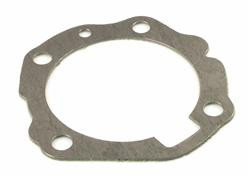
Vespa Cylinder Base Packing Plate 210cc .8mm Malossi (C50-90752000)
Size .8mm
Gasket Cylinder Base (th) 0,8mm,
MALOSSI 210cc for Vespa 200
Rally/P200E/PX200 E/Lusso
/`98/MY/Cosa 200
aluminium
Thick base and head gaskets / spacersare required for raised cylinders and crankshafts that have a longer stroke. When using a long stroke crankshaft, the half length of the additional stroke has to be compensated for by a head and/or base gasket. With compensation by a base gasket, the outlet times are lengthened and the transfer times are also clearly longer. If the outlet is also lifted somewhat by milling, it is possible to optimise the engine for higher revs. Compensation with a head gasket lengthens the outlet and transfer times only slightly, with the transfer timeing changing more than the outlet timeing (= less blow down). This represents an optimisation for more torque at middling revs.
If you install a 60mm instead of a 57mm crankshaft on a MALOSSI 210cc, the 3mm further stroke have to be compensated for a 1.5mm gasket. The following then applies:
1.5mm compensation, base: Wide revs range and high HP, but limited torque and boost to performance that is both late and only occurs suddenly.
1.5mm compensation, head: Extreme torque and risk of wheelies in the lower rev ranges but lower top speeds. On the 210cc, this is SIP's favourite touring combination, also in combination with long transmissions.
The raising of the POLINI 130cc in combination with a 54mm crankshaft is also popular, and rewareds with power, durability and winning positions. With a longer con-rod, the stroke does not change, but the cylinder has to be raised accordingly by the difference of the con-rod lengths. The base gaskets are available in 0.5mm - 10.0mm, the head gaskets are available from 0.5mm - 2.0mm. They are mostly made from aluminium.
Conclusion: Long stroke crankshaft tuning with different spacer combinations is the performance increasing trend of recent years. This is where the wheat is separated from the chaff.
increasing trend of recent years. This is where the wheat is separated from the chaff.